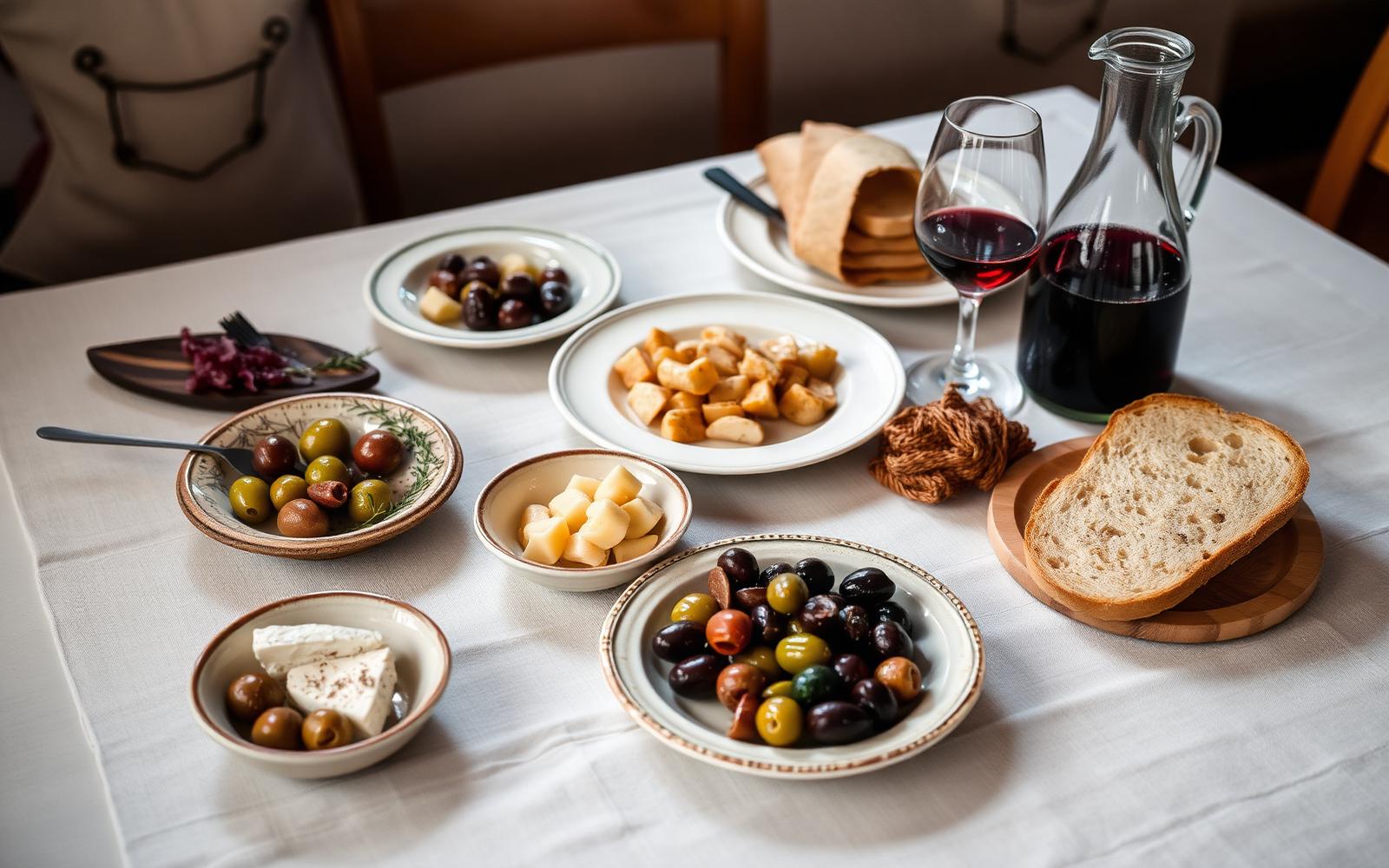

Greek wine has an image problem abroad and no image problem at all in Greece. The country grows more than two hundred indigenous varieties, many of them grown nowhere else, and the last two decades have produced a generation of small estates making genuinely serious wine.
You do not need to learn all of it. Four names will carry you a long way.
Assyrtiko
White, high acid, mineral and salty, at its most famous on Santorini where vines are trained into low baskets against the wind. Excellent with grilled fish, and one of the few white wines in the world that ages remarkably.
Xinomavro
Red, from Naoussa and Amyndeo in the north. Tannic, savoury, full of tomato and dried herb, often compared to Nebbiolo. It rewards food and patience.
Agiorgitiko
Red, from Nemea in the Peloponnese. Softer and rounder, with dark fruit and gentle spice. The easiest Greek red to love immediately.
Moschofilero
White and aromatic, from the high plateau of Mantinia. Floral, light and perfect for a long lunch in the heat.
Visiting a winery properly
Greek wine tourism is small in scale, which is its advantage. At most estates you are received by the family, not by a ticketed tasting room. A visit generally means a walk in the vineyard, a look at the cellar, four or five wines and, if you are lucky, a table with cheese and bread.
Three suggestions:
- Book ahead. Small estates need to know you are coming.
- Go in the morning. Afternoons are hot and the light in the vineyard is better early.
- One or two estates a day. Three is a race, and someone has to drive.
Regions worth building a trip around
Santorini for volcanic whites and dramatic vineyards. Nemea for reds within easy reach of Athens and Nafplio. Naoussa for serious Xinomavro and mountain scenery. Crete for old varieties being rediscovered by young winemakers.
A wine-led journey through Greece is really a food-led journey with better structure — the estates put you in the countryside, and the countryside puts you at the right tables.